London Aviation Museum wartime experience page

Wartime Experience

During World War II and the early post-war period, pilot and aircrew training in London, Ontario, was intense and not always safe. Accidents and mishaps were an unfortunate reality, reflecting the constant risks faced by those preparing for combat and service.

Wartime Training Accidents

1940–1943

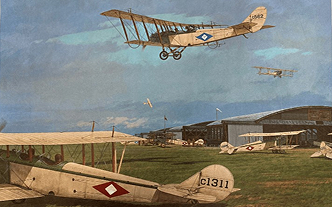
Early Aviation in London image

30 Oct 1940

Fleet Finch, #3 EFTS London

Aircraft entered a spin; insufficient altitude to recover; instructor and student killed

2 Sep 1941

Anson 6141 & 6146, 4 AOS London

Mid-air collision; 2 civilian pilots died, 2 students survived, 3 crew survived

2 Sep 1941

#3 EFTS London

Students killed during solo training

4 Aug 1942

Anson 6839, 4 AOS London

Crash at Kintore, Ontario; students bailed out

3 Nov 1942

Anson 6341, 4 AOS London

Night navigation exercise crash near Dorchester; some crew died on impact, others later from injuries

14 May 1943

Anson 7064, 4 AOS London

Pilot lost consciousness; student navigator took control; aircraft crashed into Lake Erie

01 Jan 1944

Kenneth Gerald Spooner was posthumously awarded the George Cross, for his bravery during the accident.

The British Commonwealth Air Training Plan

The #3 Elementary Flying Training School (EFTS) and #4 Air Observers School (AOS) in London were part of the British Commonwealth Air Training Plan (BCATP), one of the most significant contributions Canada made to the Allied war effort.

#3 Elementary Flying Training School

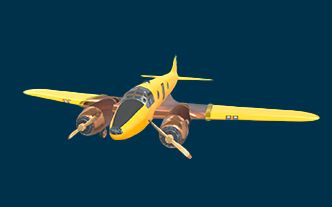
50 hours of basic flying instruction over 8 weeks using De Havilland Tiger Moth, Fleet Finch, or Fairchild Cornell aircraft.

#4 Air Observers School

8-week air observer (navigator) training, followed by specialized courses in Bombing & Gunnery and Navigation.

Schools were operated by civilian flying clubs under RCAF contract. Instructors at EFTS were primarily civilian pilots, while AOS instructors were RCAF personnel.

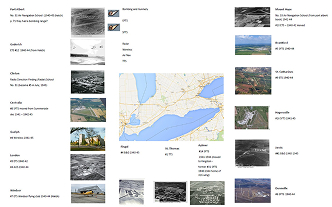
Southwestern Ontario hosted 16 BCATP sites, chosen for their flat farmland, proximity to the Great Lakes, and low population density reducing the risk of ground casualties during training accidents.

130,000+ Airmen Trained

These schools collectively prepared pilots, navigators, bomb aimers, wireless operators, and gunners for service overseas, playing a vital role in Allied air superiority.
420 Snowy Owl Auxiliary Fighter Squadron

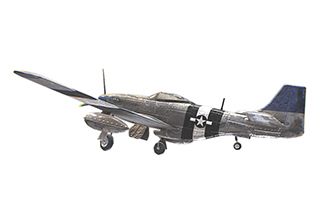
The post-war period brought new challenges as auxiliary squadrons trained reservists on high-performance fighter aircraft. These incidents illustrate the ongoing risks of military aviation training, even in peacetime.

Early Aviation in London image

25 Oct 1952

  • P-51 Mustang
  • Location: Near Walkerton
  • Aircraft broke up mid-air
  • F/O Grant Thomas Stewart, 23

1 Nov 1953

  • P-51 Mustang
  • Location: Near Mount Forest
  • High-speed crash
  • F/O Robert Clinton Bailey, 23

20 Jul 1954

  • P-51 Mustang
  • Location: London
  • Undershot runway in rainstorm
  • F/O Peter D'Oliveyra Fisher, 24

26 Sep 1954

  • P-51 Mustang
  • Location: Uplands Airforce Base
  • Mid-air explosionr
  • F/O James Arthur Foot, 30

2 Apr 1955

  • CT-133 Silver Star
  • Location: London East
  • Aircraft crash
  • F/O John Allan Smith, 20; Flight Cadet William H. Couldridge

15 Apr 1956

  • P-51 Mustang
  • Location: Shortly after take-off
  • Engine stall
  • F/L William Gray Goodeve, 34